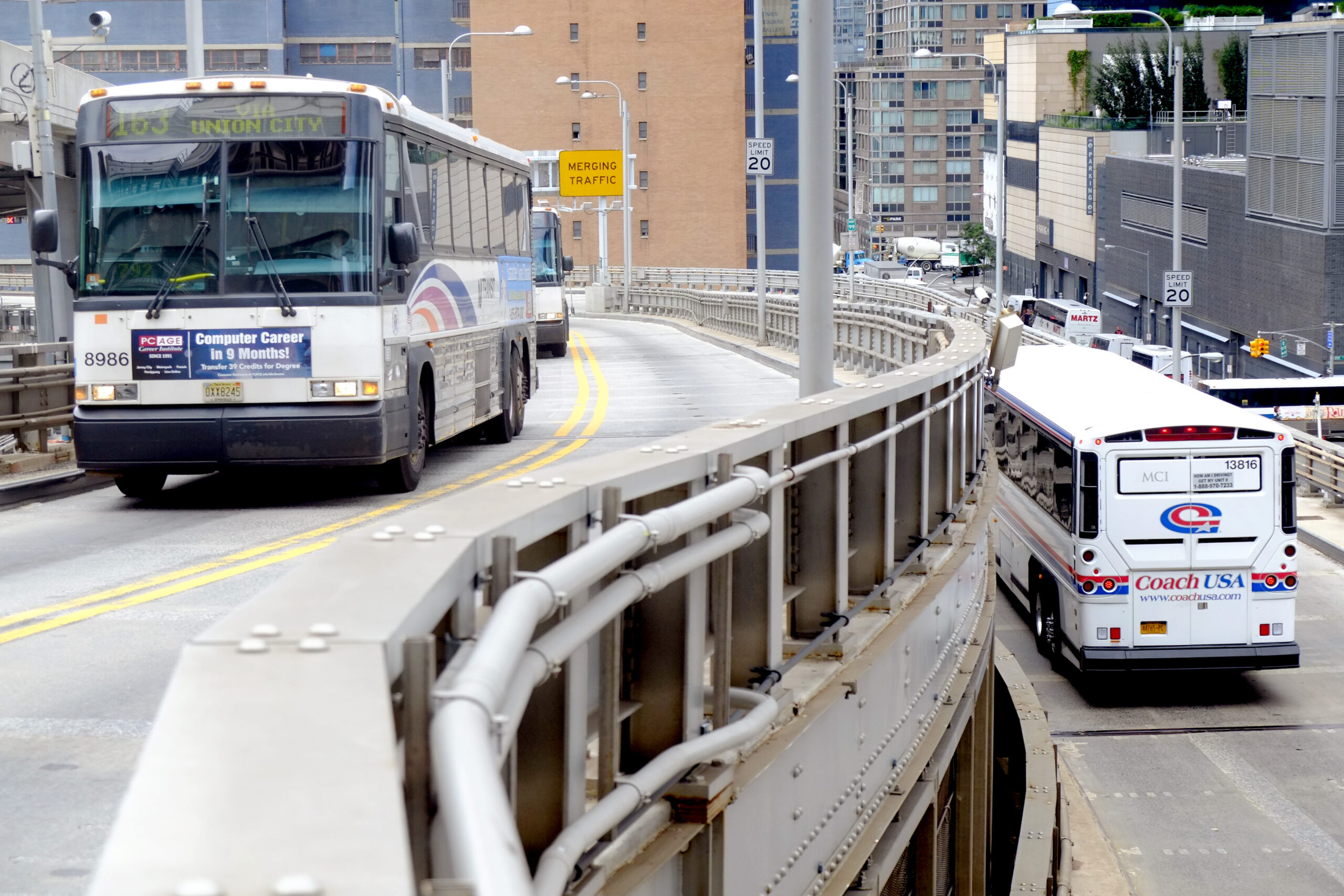
Hudson County’s commuter infrastructure is dense by any measure. Journal Square PATH station, Newport, Exchange Place, and Grove Street process hundreds of thousands of riders weekly. The Hudson-Bergen Light Rail connects communities from Bayonne to North Bergen through stations spread across the county. NJ Transit bus terminals and stops serve riders throughout Jersey City, Hoboken, Kearny, and into Newark. For the millions of people who pass through these facilities, an injury from a slip and fall, a broken platform surface, inadequate lighting, a faulty escalator, or any other hazardous condition on transit property is not a standard personal injury claim. It is a claim against a government entity, and that distinction changes nearly everything about the legal process. The Law Offices of Anthony Carbone has represented commuters injured at PATH stations, NJ Transit facilities, and Port Authority terminals throughout Hudson County, and the single most important thing to know is that the deadline to preserve your rights is 90 days.
Why Government Entity Claims Are Different: The New Jersey Tort Claims Act
The New Jersey Tort Claims Act, N.J.S.A. 59:1-1 et seq., governs personal injury claims against public entities in New Jersey, including NJ Transit, the Port Authority of New York and New Jersey, the New Jersey Transit Corporation, the Hudson-Bergen Light Rail operating authority, and municipalities. The Act provides a framework for suing government entities that would otherwise enjoy sovereign immunity from suit, but it imposes conditions and limitations that do not apply to claims against private parties.
The most consequential requirement for most commuters is the notice of claim provision. Before a lawsuit can be filed against a public entity in New Jersey, the claimant must first file a written notice of claim with the entity. This notice must be filed within 90 days of the incident. For most personal injury claims in New Jersey, the statute of limitations is two years. The 90-day notice requirement is a separate, earlier deadline that operates as a condition precedent to litigation, not as a limitations period. Missing it does not toll the two-year clock. It eliminates the ability to sue the government entity entirely, regardless of how strong the underlying negligence claim is.
Courts in New Jersey have allowed late notice in limited circumstances where the claimant can demonstrate extraordinary circumstances that prevented them from filing on time and that the public entity was not substantially prejudiced by the delay. This exception is construed narrowly. Injury, pain, and the ordinary confusion following an accident are not extraordinary circumstances. The better approach by a significant margin is filing within 90 days and not having to litigate the notice question at all.
NJ Transit’s Specific Duties and Where Liability Arises
NJ Transit, as a public entity operating transportation facilities for public use, owes a duty of reasonable care to people lawfully using those facilities. This includes maintaining station platforms, stairways, escalators, elevators, waiting areas, and the areas immediately outside station entrances in a reasonably safe condition, providing adequate lighting, and giving reasonable warning of hazardous conditions that cannot be immediately remediated.
Common injury scenarios at NJ Transit facilities in Hudson County include wet platform surfaces from rain or cleaning that create slip hazards without adequate warning, broken or uneven platform surfaces that cause trips, escalator malfunctions that cause falls, elevator failures that strand mobility-impaired riders or force them to use stairs in ways that lead to falls, and inadequate lighting in stairwells and station areas. Each of these conditions generates a premises liability analysis under the Tort Claims Act framework.
The Tort Claims Act imposes an additional substantive requirement beyond what standard negligence requires. To establish liability against a public entity for a dangerous condition of public property, the claimant must show that the entity had actual or constructive notice of the dangerous condition in sufficient time to have taken protective measures before the accident occurred, and that the cost and practicability of protecting against the condition was not unreasonable. This is a more demanding standard than the general premises liability analysis, and it reflects the Act’s purpose of limiting the scope of government liability to situations where the entity had meaningful opportunity to prevent the harm.
The Port Authority of New York and New Jersey: A Different Governmental Structure With Different Procedures
The Port Authority of New York and New Jersey is a bi-state agency created by compact between New Jersey and New York. It operates the PATH train system that connects Jersey City and Hoboken to Manhattan, as well as the Port Authority Bus Terminal in Midtown Manhattan. Claims against the Port Authority are governed by a separate statutory framework, not the New Jersey Tort Claims Act, and the procedures differ from those applicable to NJ Transit.
New Jersey law requires that a claimant file a notice of claim against the Port Authority within 90 days of the incident, in a form that satisfies N.J.S.A. 32:1-163. New York law imposes its own notice requirement of 90 days under N.Y. Public Authorities Law § 1276. For accidents on PATH facilities located in New Jersey, New Jersey law generally governs the substantive negligence claim. The notice requirement under both states’ laws may be implicated depending on the location and circumstances.
The Port Authority is not automatically entitled to the same sovereign immunity protections as state agencies. New Jersey courts have held that the Port Authority is subject to suit under New Jersey law for negligent maintenance of PATH stations and facilities in New Jersey. The notice requirement, however, is strictly enforced, and a claimant who does not file the required notice within the applicable period loses the ability to pursue the claim regardless of its merits.
What to Do Immediately After an Injury at a Transit Facility in Hudson County
Report the incident to station personnel or transit authority staff before leaving the facility if at all possible. Ask for a written incident report and keep a copy. Photograph the hazardous condition, the area where the incident occurred, and any visible injuries. Collect names and contact information from anyone who witnessed the incident.
Seek medical attention the same day or the next morning. The gap between the incident and the first medical record is one of the first things a public entity’s defense will use to argue the injury was not caused by what happened at the station. The contemporaneous medical record is your documentation that the injury occurred when and how you say it did.
Contact an attorney as soon as possible. The 90-day notice deadline begins running on the date of the incident, and it cannot be extended after it passes. The calculation of 90 days in transit cases is not generous. If the incident was on a Friday afternoon, 90 days from that date may fall on a weekend, which means the effective last filing day is the preceding business day under New Jersey court rules for notice documents.
Contact The Law Offices of Anthony Carbone About Your Transit Injury in Hudson County
Injuries at PATH stations, NJ Transit bus facilities, and light rail stops throughout Hudson County generate valid premises liability claims when the negligent maintenance or unsafe conditions of a government-operated facility caused the harm. The legal framework is manageable, but only if the 90-day notice deadline is met. Missing it closes the door on the claim permanently.
The Law Offices of Anthony Carbone represents commuters and transit users injured at NJ Transit and Port Authority facilities throughout Jersey City, Hoboken, Newark, and Hudson County. Attorney Carbone provides free consultations at 201-685-3442, including evening and weekend availability, and Spanish-speaking staff are on hand for clients who prefer to communicate in Spanish. If you were injured on public transit property, the clock on your notice deadline is already running.
Disclaimer: This blog post is for general informational purposes only and does not constitute legal advice. Reading this content does not create an attorney-client relationship. Results may vary depending on your particular facts and legal circumstances. Attorney advertising. Prior results do not guarantee similar outcomes.